Lesson Plans
See below for an ever-evolving collection of lesson plans I’ve developed.
01
Hand Lettering Typography
-
Throughout time and across cultures, humans alter the mundane, everyday to offer expressive creative acts and communications through their own hand-crafted gestures.
-
This lesson serves as a moment to step back, and think about type through composition. As artists, we sometimes see type design as a thing that needs to live digitally, and this brings a new idea of organic and on-paper creation. Through exploration, students will also find the expressive quality that different fonts and typographic elements can harness. While the end piece will be an inked saying, the option to choose their phrase and typefaces allow expressive and creative freedom for this assignment.
-
Artists will be introduced to the many examples of typography in the design world (including contemporary and some historical pieces)
Artists will begin to think of type as a compositional element instead of words. They will use this thinking to create dynamic layouts.
Artists will continue to hone their craftspersonship with the use of drafting with pencil, tracing, and inking finalized pieces.
Student Exemplars: Hand Lettering
-
![]()
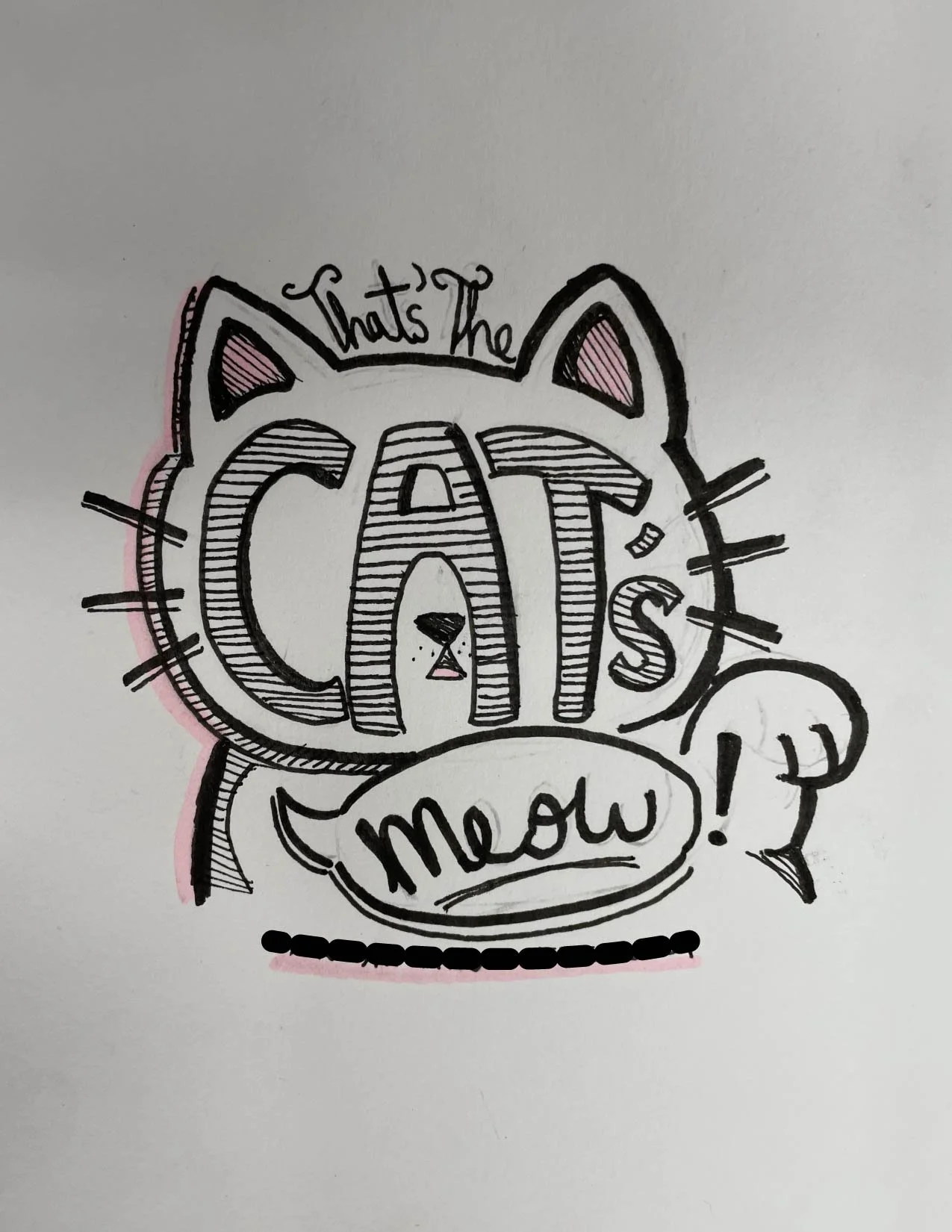
The Cat's Meow
-
![]()
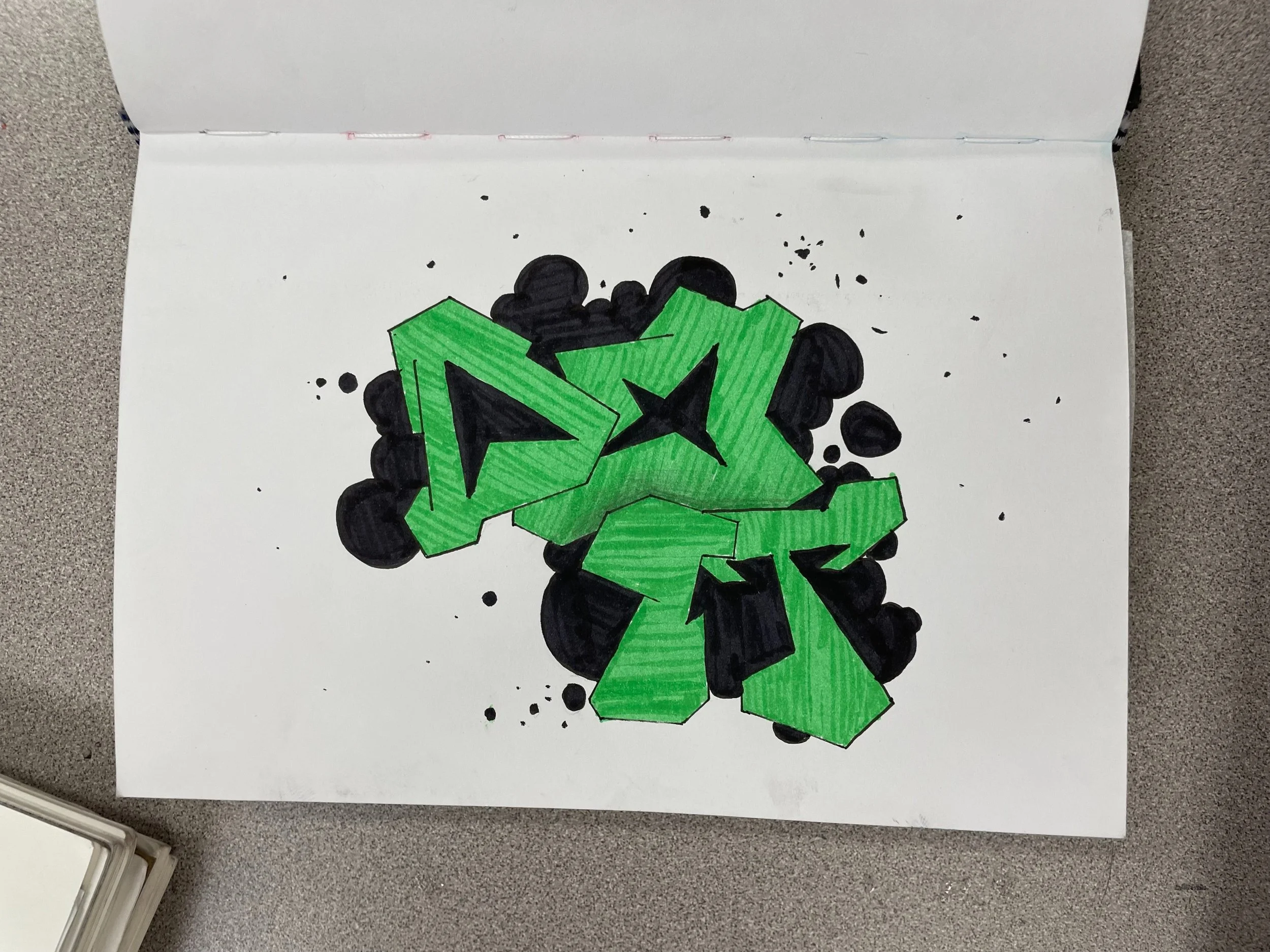
Do It
-
![]()
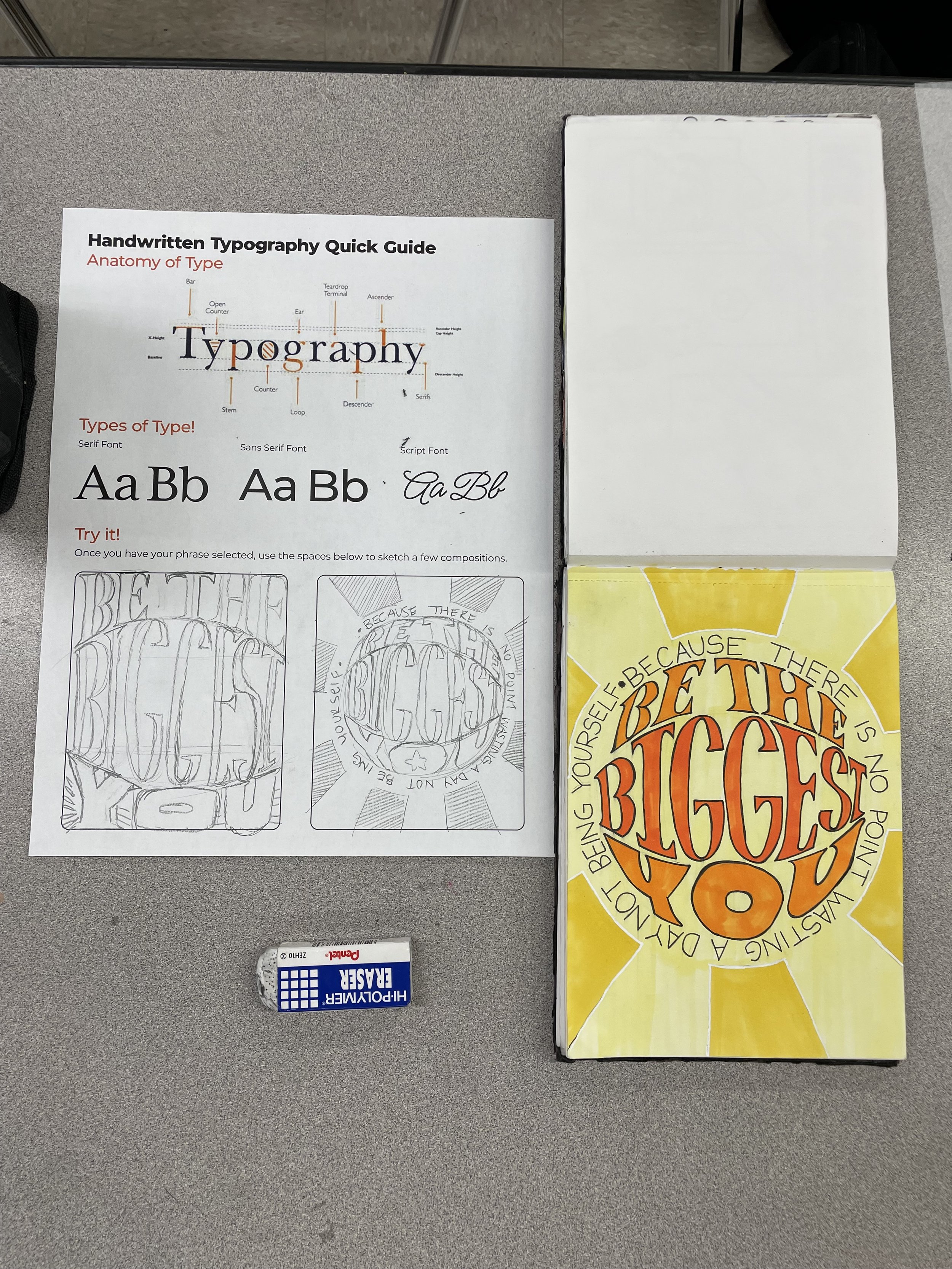
Be The Biggest You
-
![]()
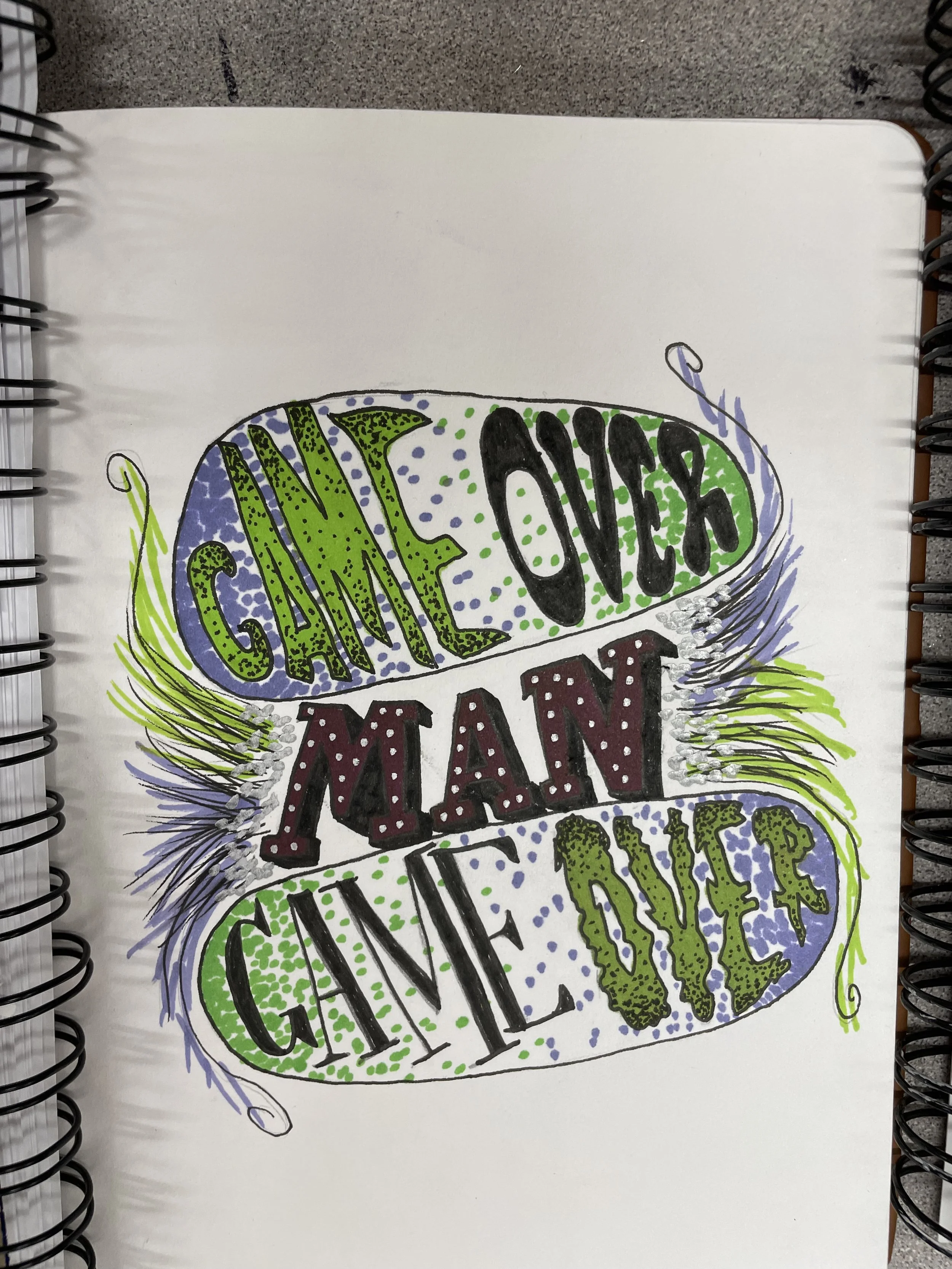
GAME OVER MAN
-
![]()
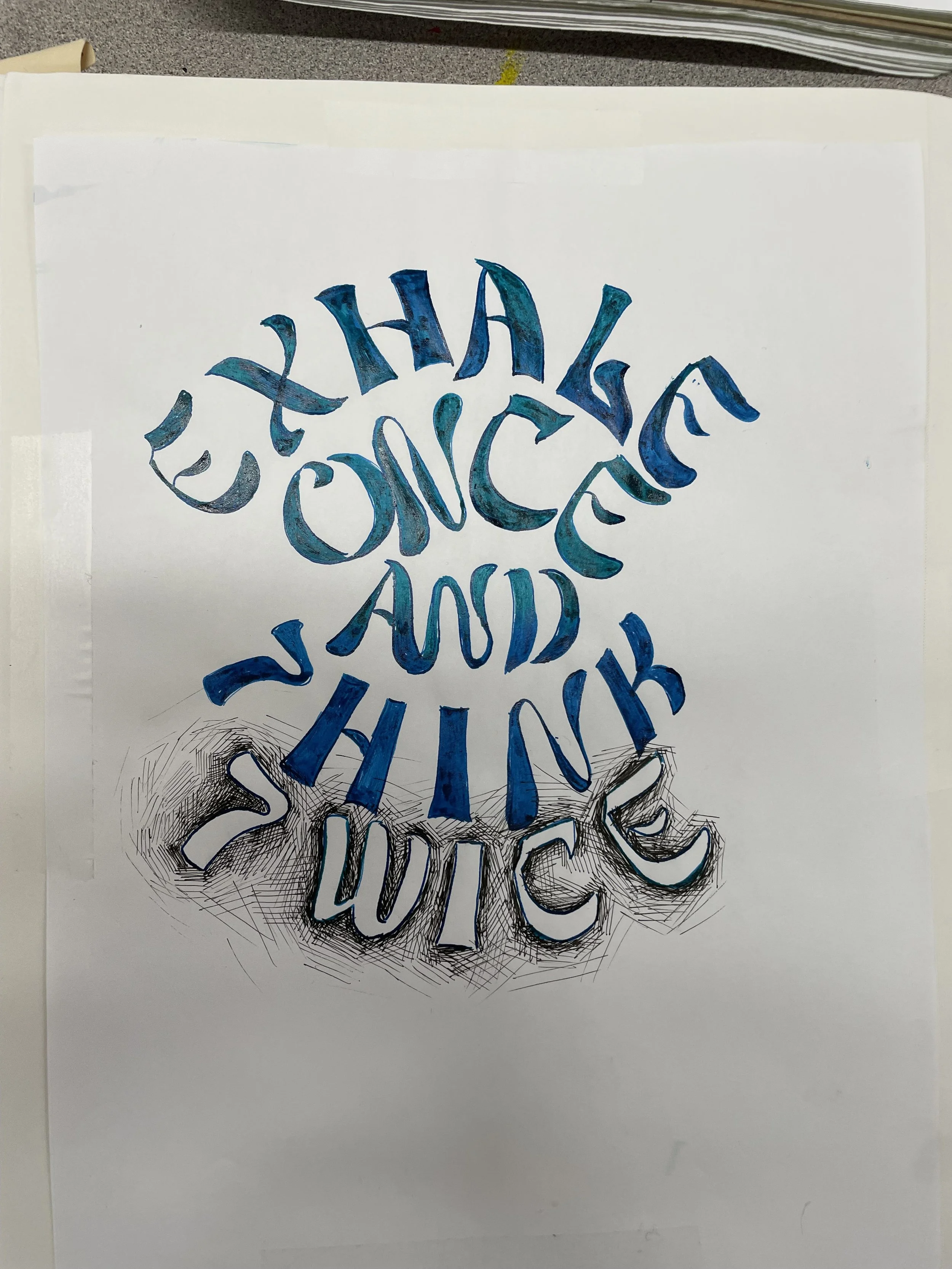
Exhale Once and Think Twice
02
Frankentoys
(Scale and Proportion Unit)
-
Throughout time and across cultures, societies interact with items everyday, however, what goes into a successful design of their product. Students will explore choices in additive sculpting to design a toy product.
-
In this multi-day collaborative project, students assume the role of product designers to create an original “Frankentoy” - a prototype that combines two existing toy concepts into one innovative sculptural design. Building on prior learning from the Tiny Toys lesson, students apply their understanding of scale and proportion to draft, construct, refine, and present a three-dimensional toy prototype using paper, plaster wrap, paper clay, and paint.
Students work in teams to develop a company identity, sketch and refine their concept, construct an additive sculpture, and design a visual or verbal pitch to present their toy to peers. Throughout the process, students engage in critique, reflection, and collaborative problem-solving while exploring craftsmanship, structural integrity, and visual hierarchy in product design.
-
Artists will apply scale and proportion intentionally to emphasize detail, create structural balance, and communicate the personality and function of their toy prototype.
Artists will use additive sculpting techniques (paper construction, plaster wrap, and surface treatments) to build, refine, and strengthen three-dimensional form.
Artists will collaborate and present professionally by delegating roles, refining their prototype through feedback, and pitching their final design to an audience.
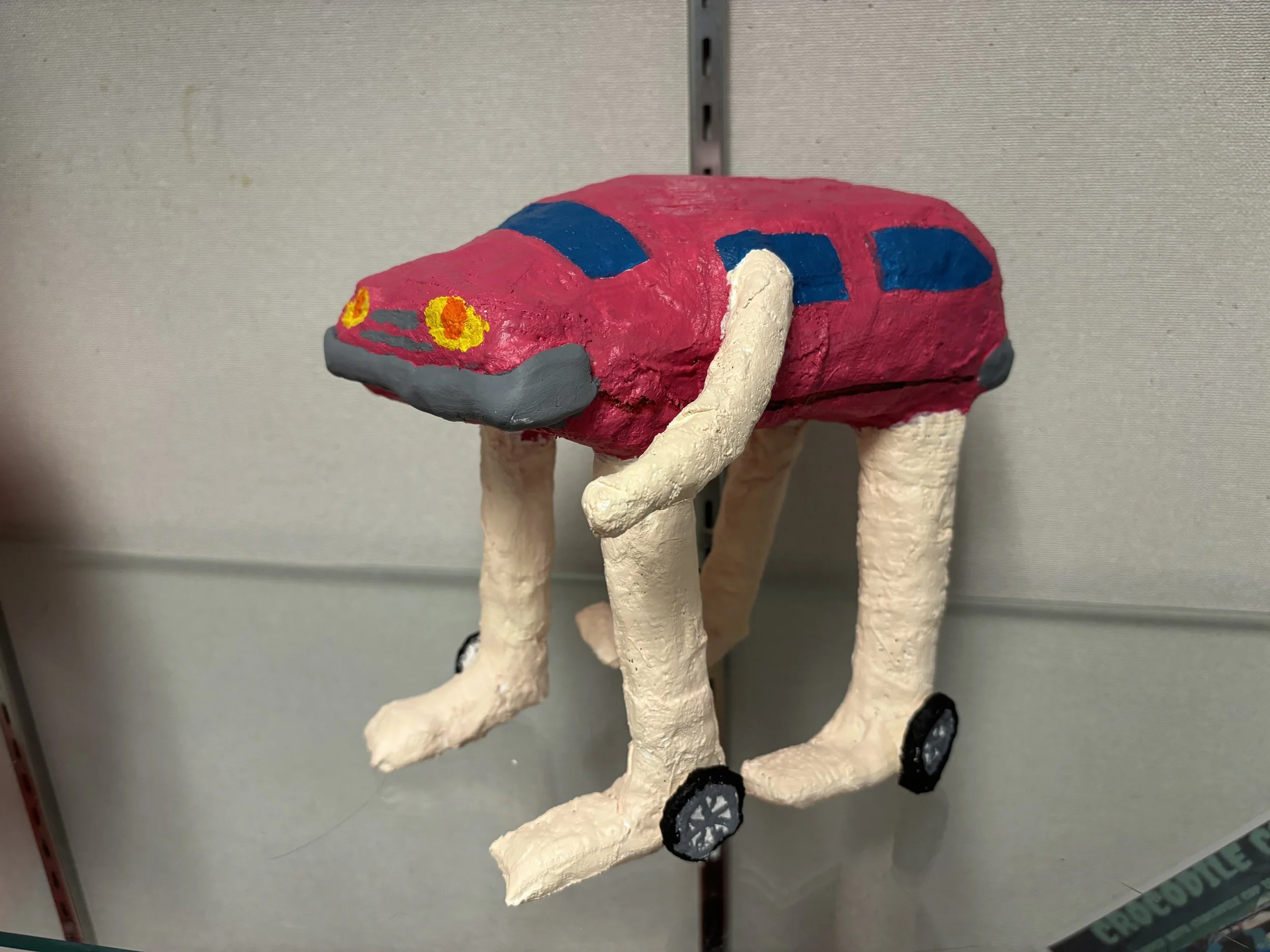
Student Exemplars: Frankentoys
-
![]()
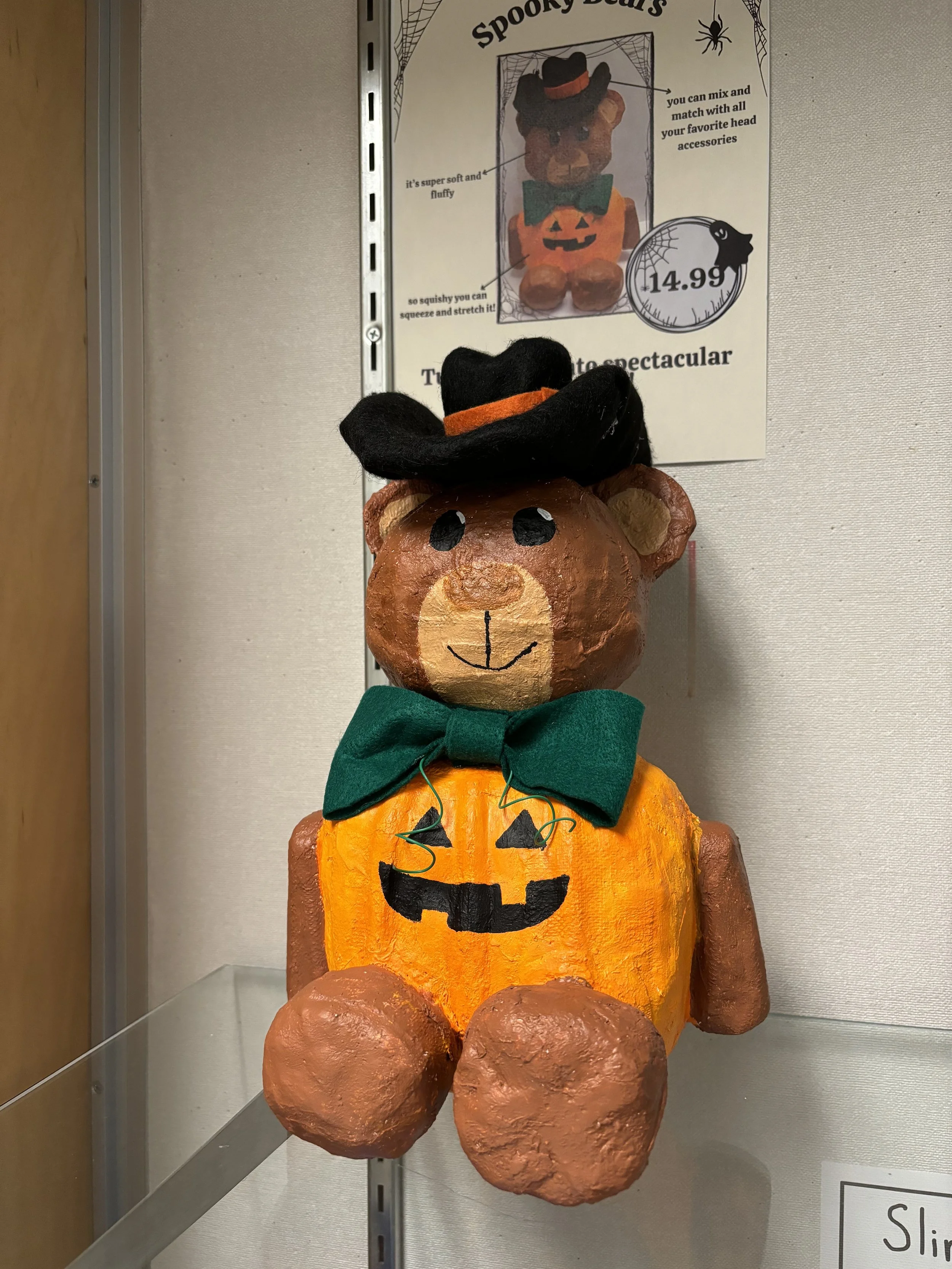
Spooky Paws
-
![]()
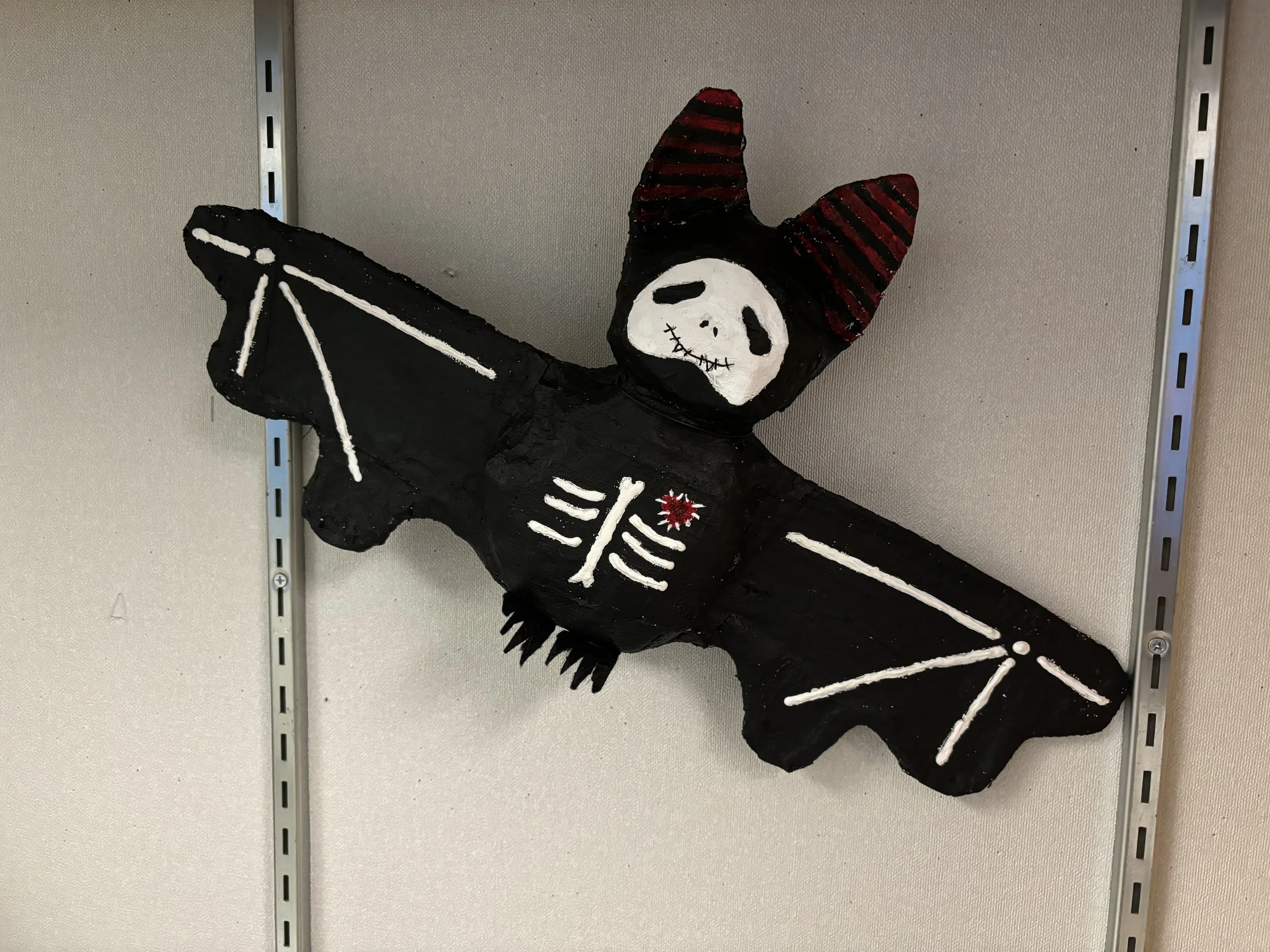
Duckula
-
![]()
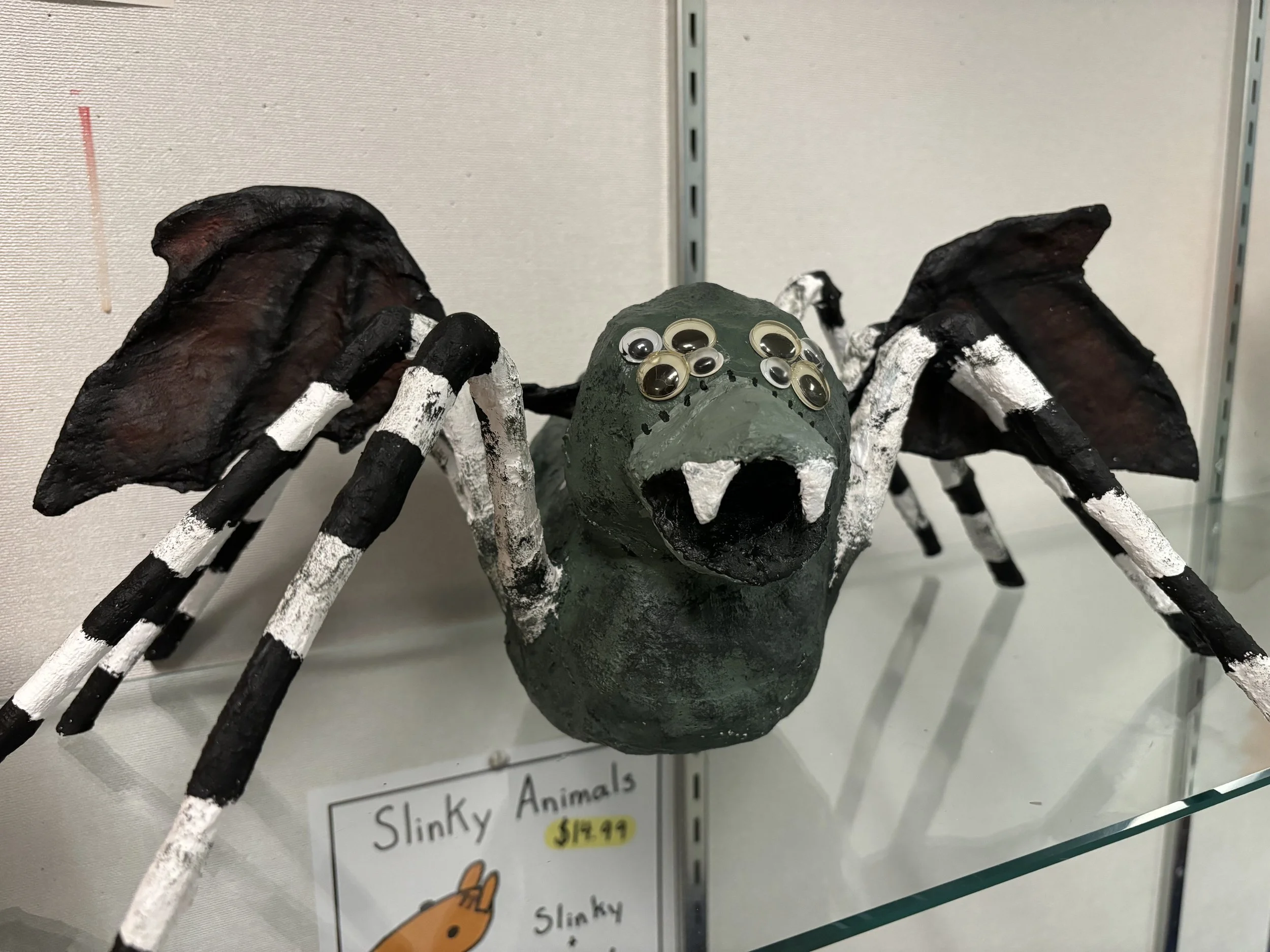
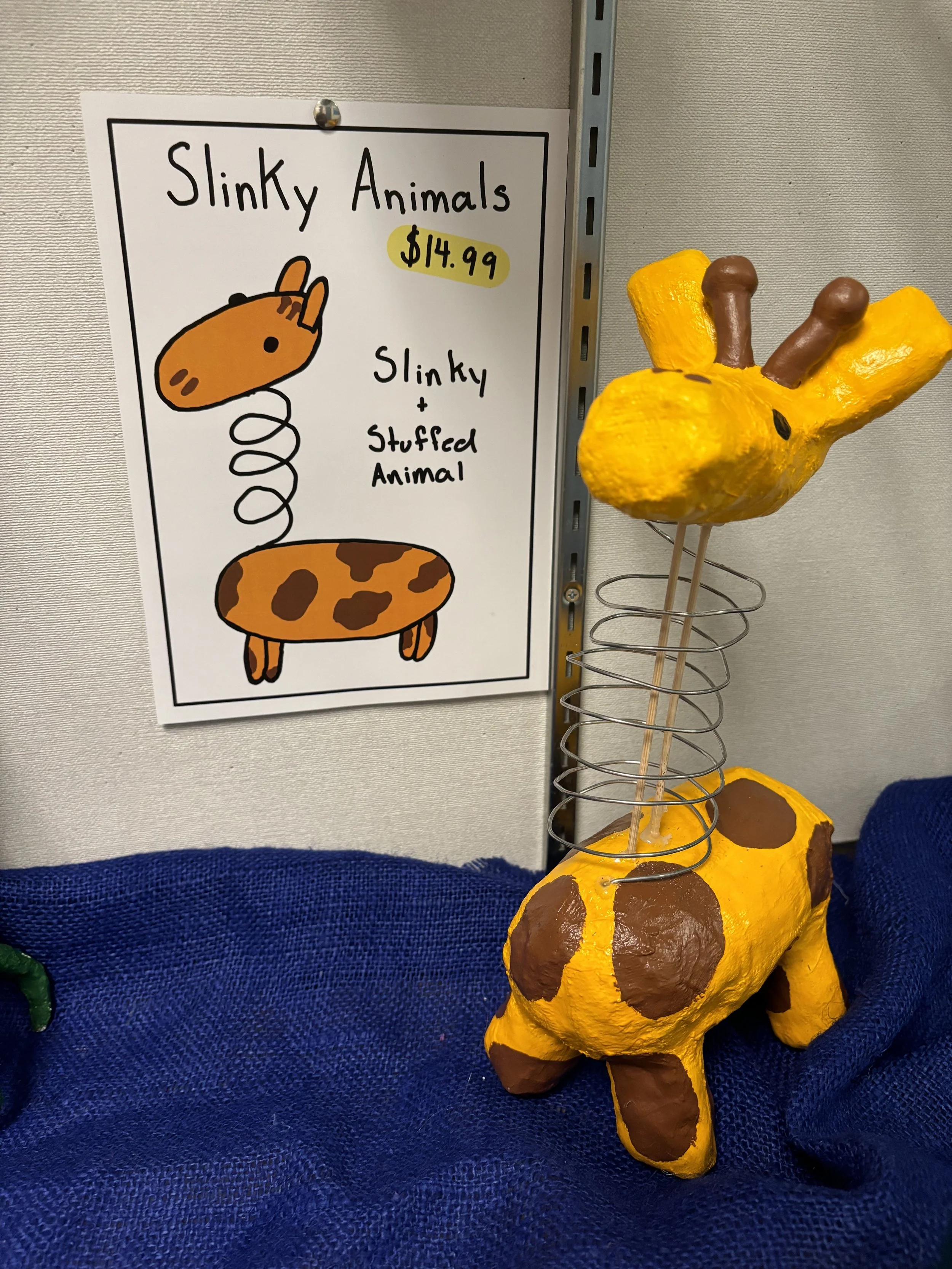
Slinky Animals
-
![]()
Michael
-
![]()
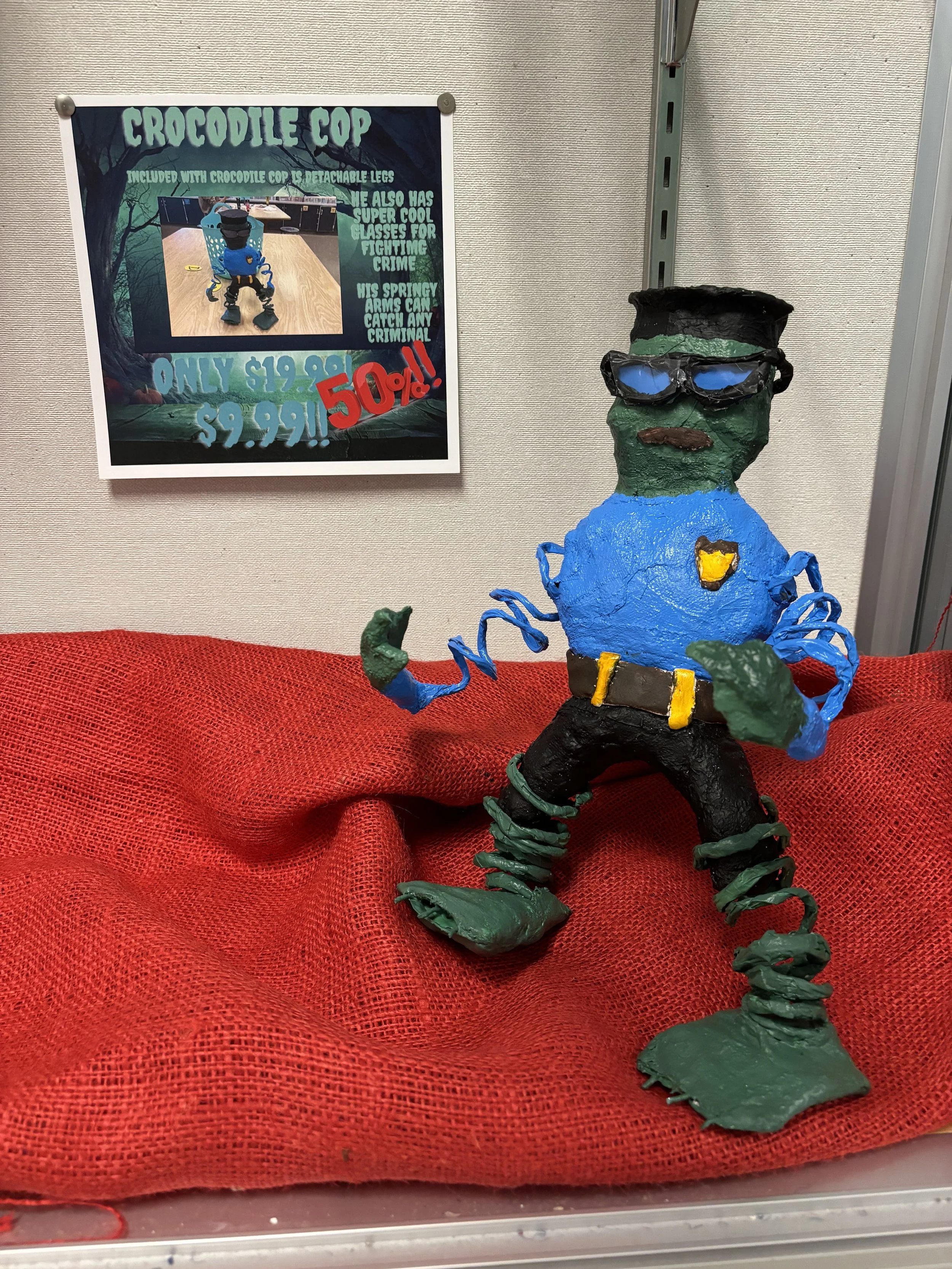
Crocodile Cop
-
![]()
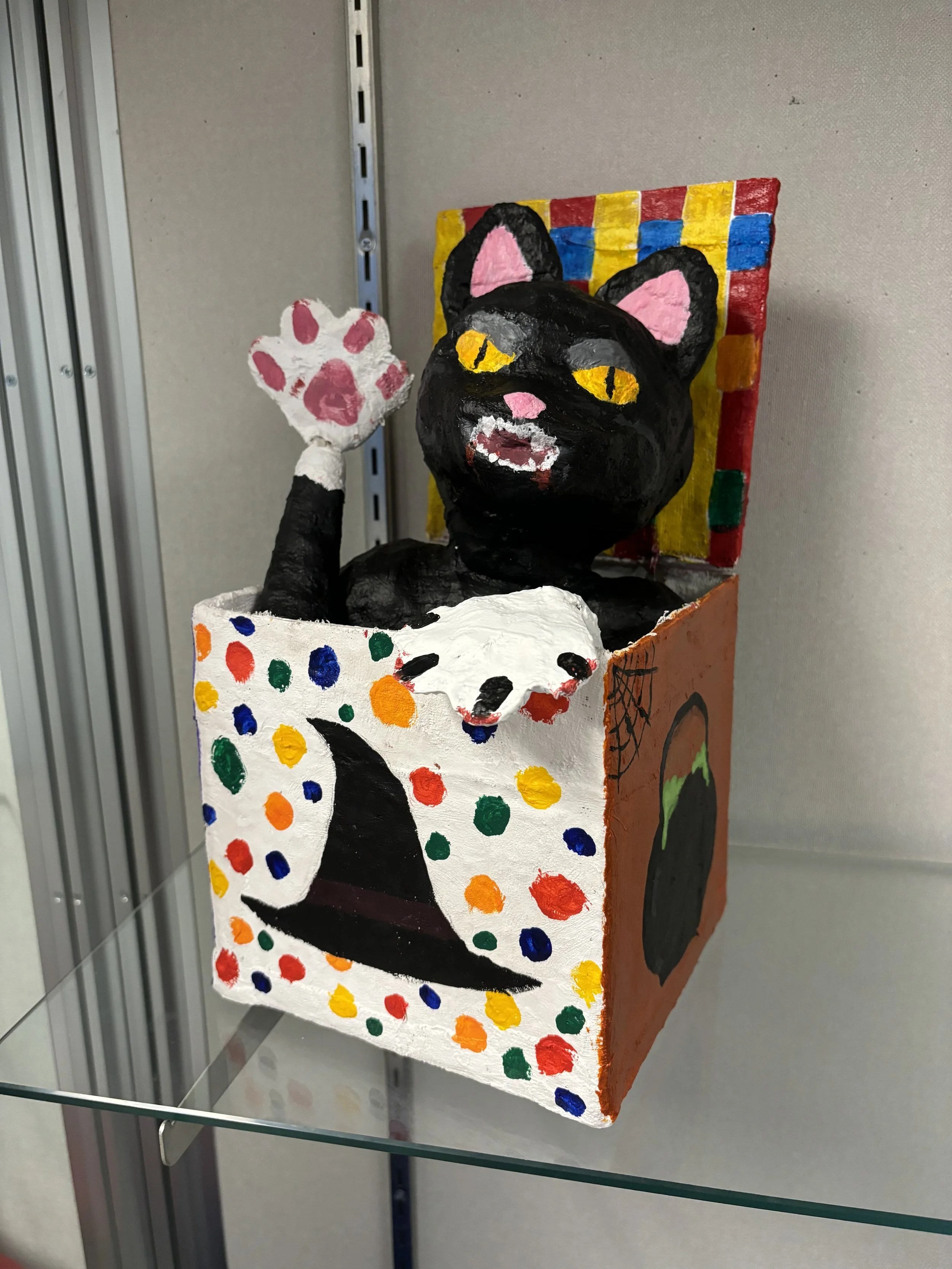
CAT IN THE BOX
03
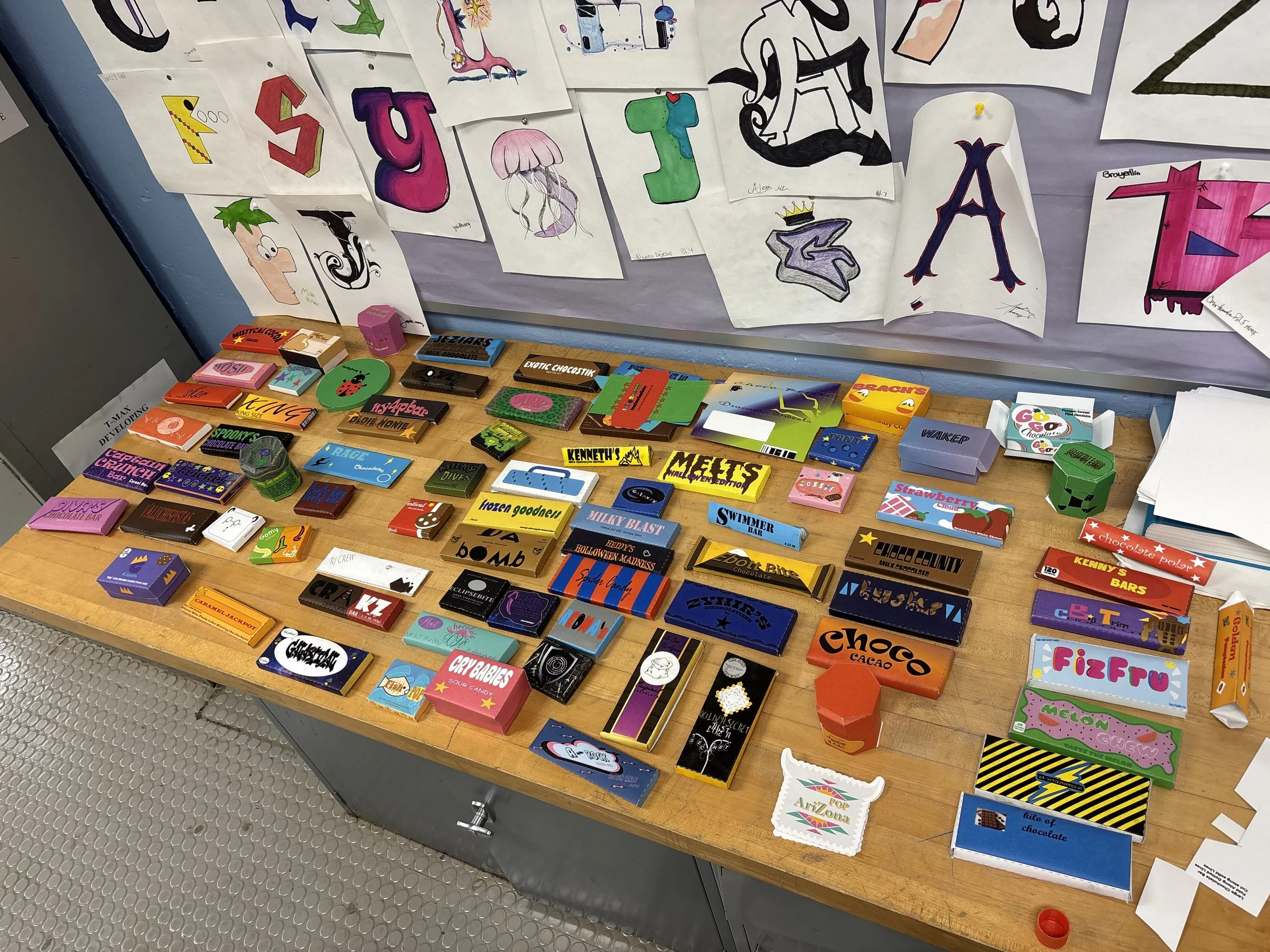
Spooky Sweets
(Illustrator Packaging/Design Unit)
-
Designers use branding, typography, color, and layout to influence consumer choices and communicate clearly to a specific audience. Through digital design and physical prototyping, artists explore how visual decisions impact perception, marketability, and product identity.
-
In this multi-day branding and packaging project, students design an original candy bar from concept to physical prototype. Beginning with audience research and candy bar analysis, students develop a brand identity including a name and logo, then apply principles of layout and visual hierarchy to design a full candy wrapper in Adobe Illustrator. Students prepare a print-ready file and assemble a three-dimensional mock-up of their packaging. The unit concludes with a reflective “Candy Shop” critique, where students analyze how branding, typography, and design choices influence consumer appeal and product identity.
Students work in teams to develop a company identity, sketch and refine their concept, construct an additive sculpture, and design a visual or verbal pitch to present their toy to peers. Throughout the process, students engage in critique, reflection, and collaborative problem-solving while exploring craftsmanship, structural integrity, and visual hierarchy in product design.
-
Artists will develop a cohesive brand identity by designing a candy bar name, logo, and visual system that communicates to a specific target audience.
Artists will apply principles of layout and visual hierarchy to organize information clearly and create an eye-catching, marketable candy wrapper design.
Artists will use digital tools and production processes professionally by creating vector artwork in Illustrator and preparing a print-ready prototype for physical assembly.
Student Exemplars: Spooky Sweets
-
![]()
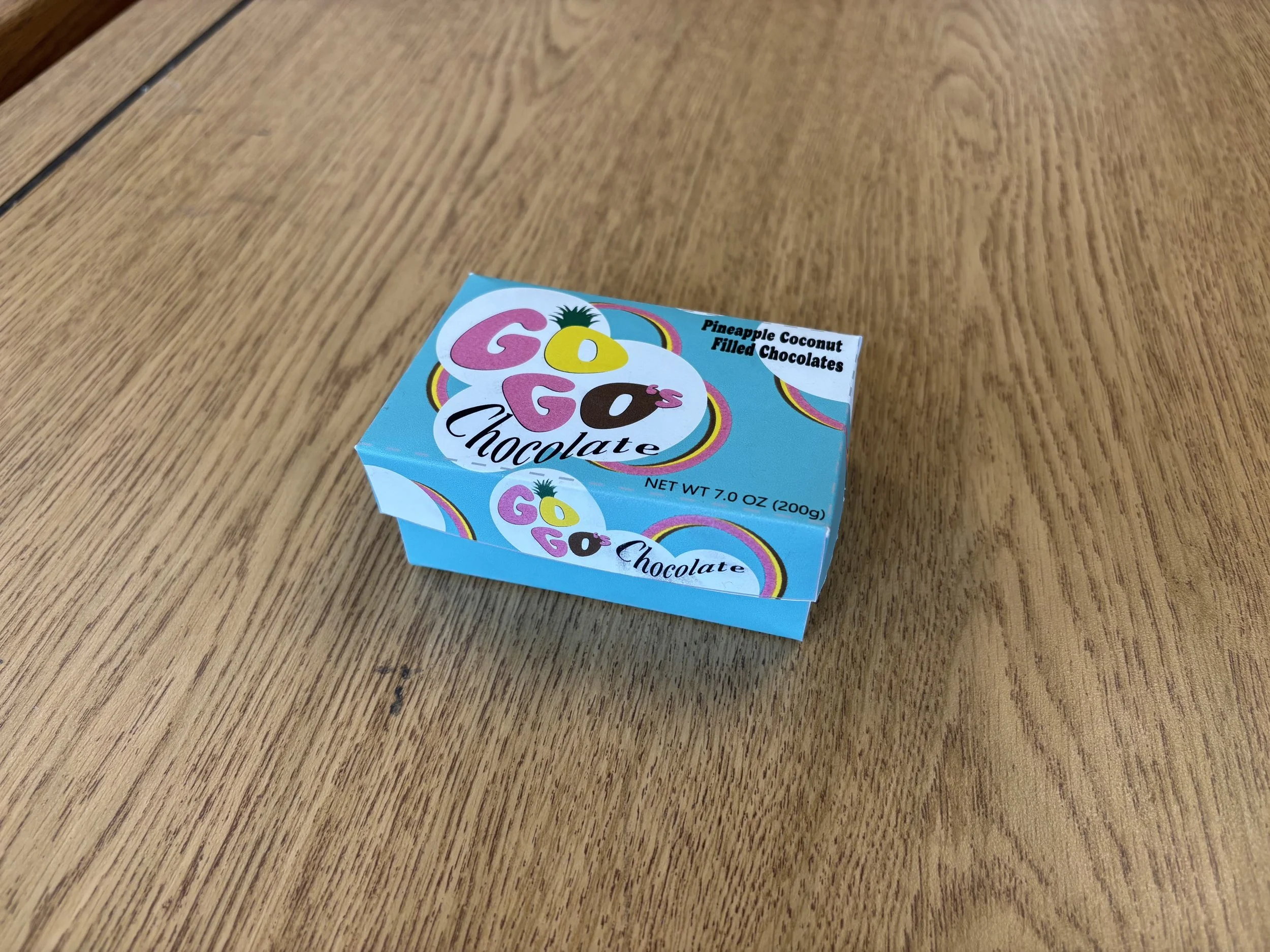
GoGo Chocholate
-
![]()
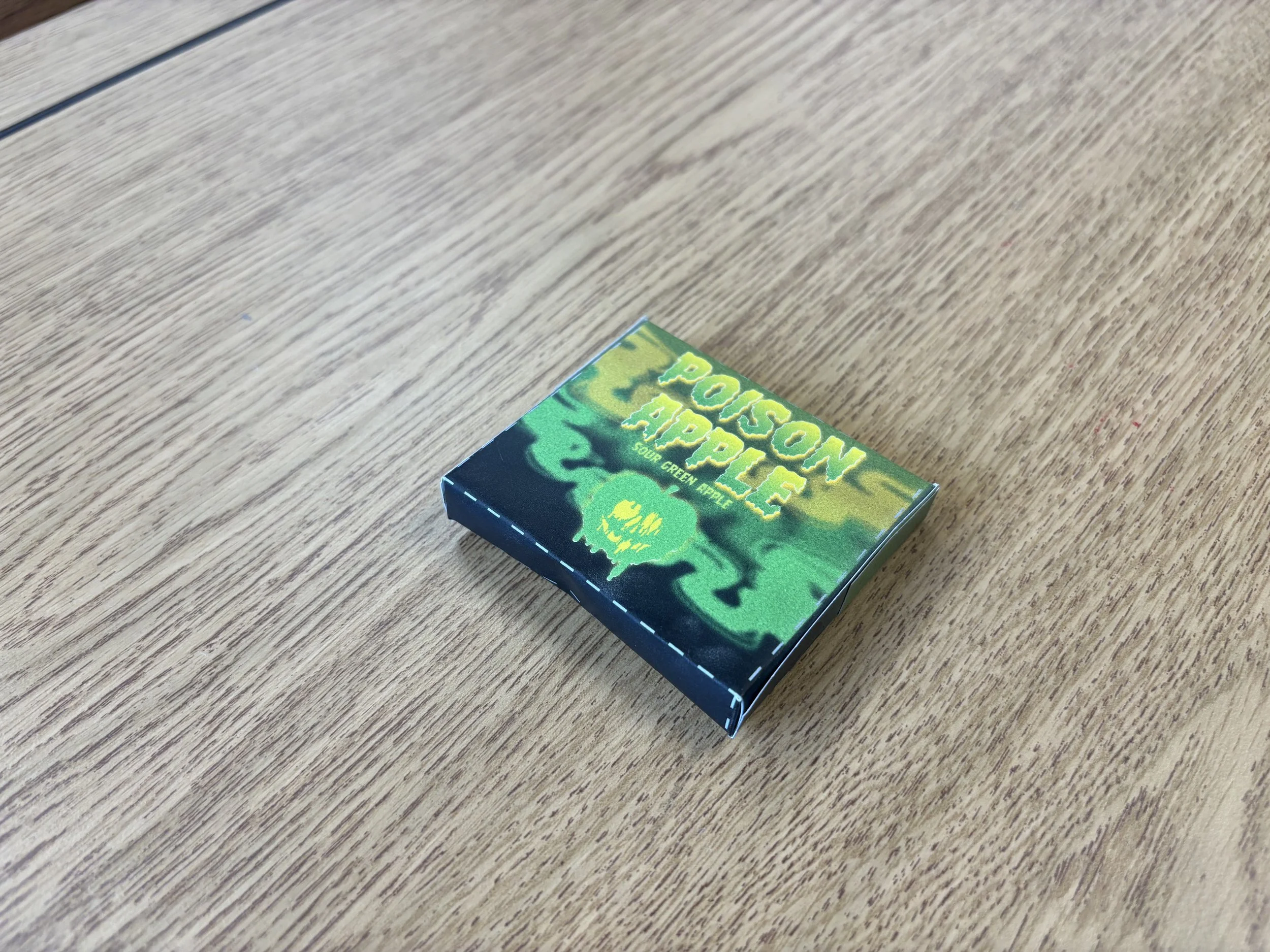
Poison Apples
-
![]()
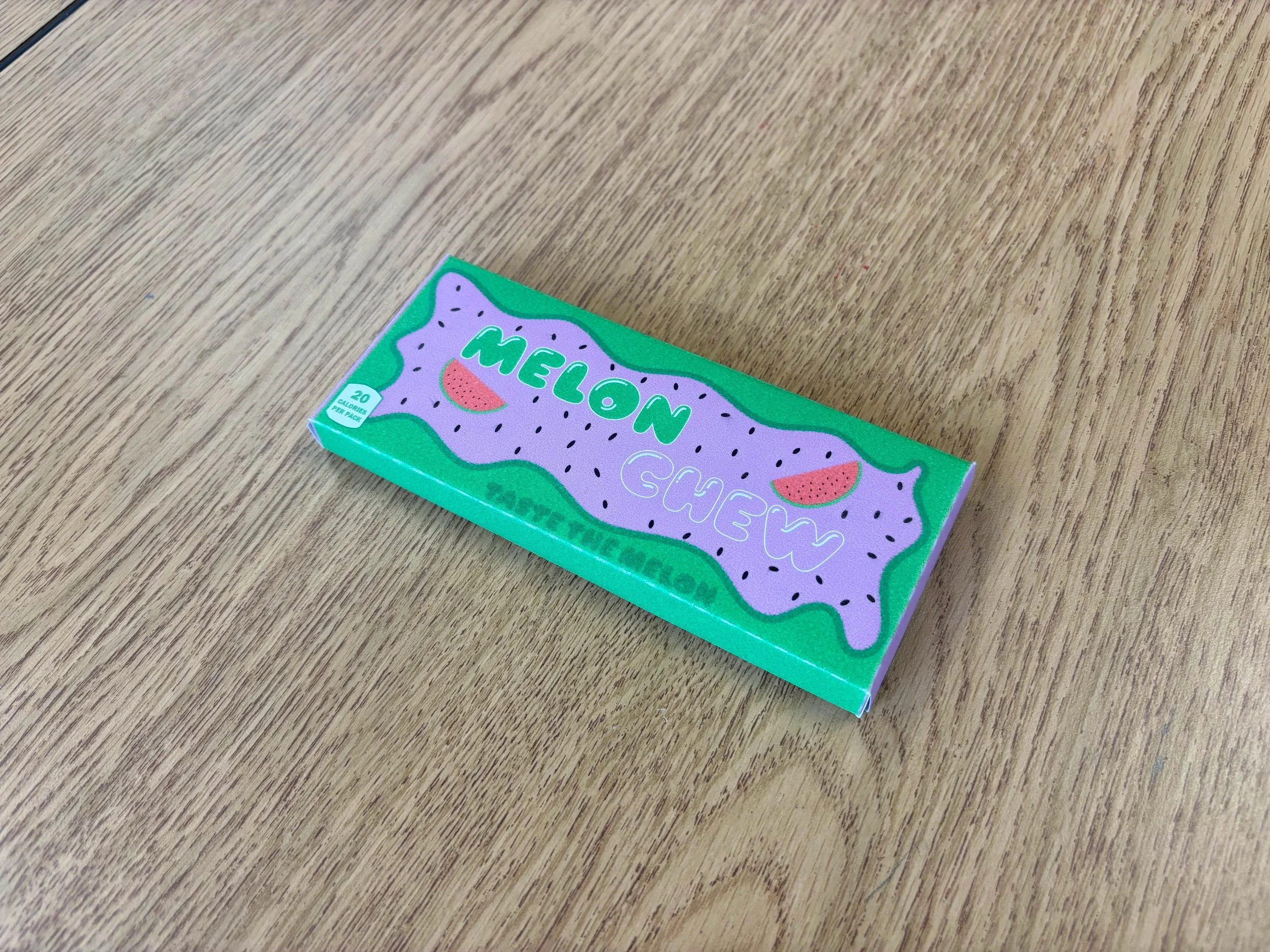
Melon Chew
-
![]()
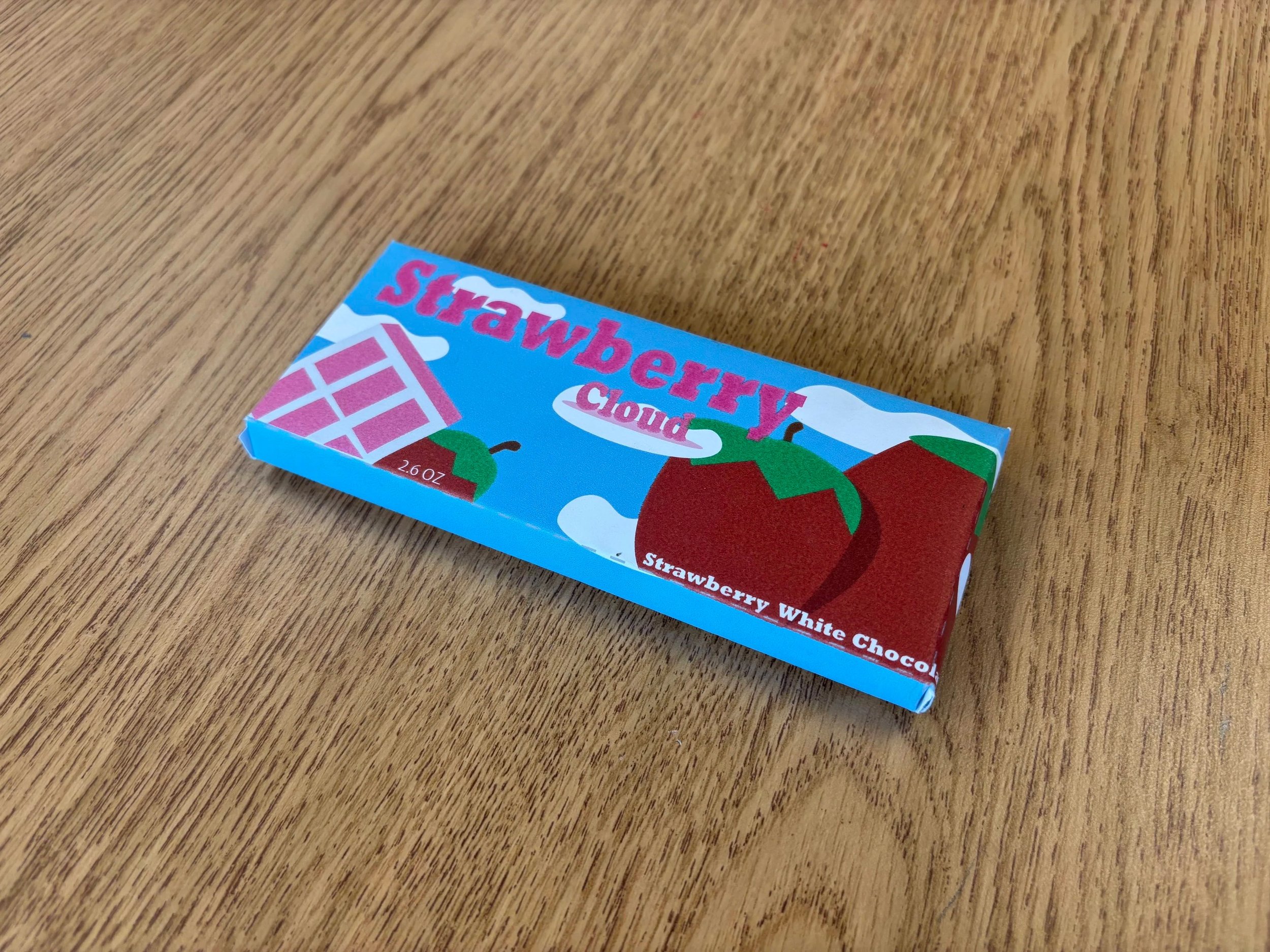
Strawberry Cloud